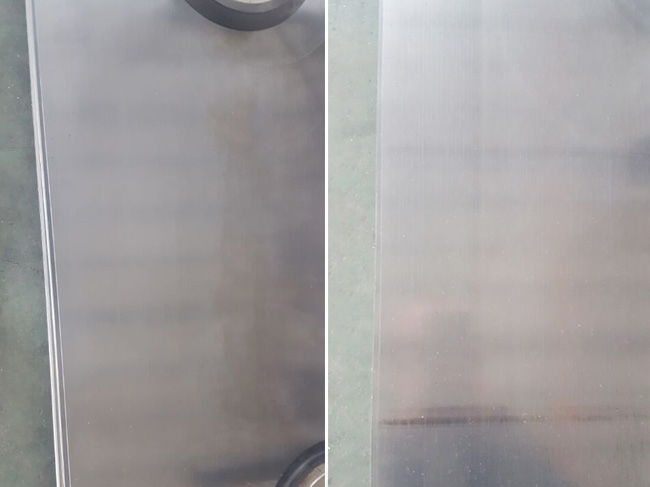
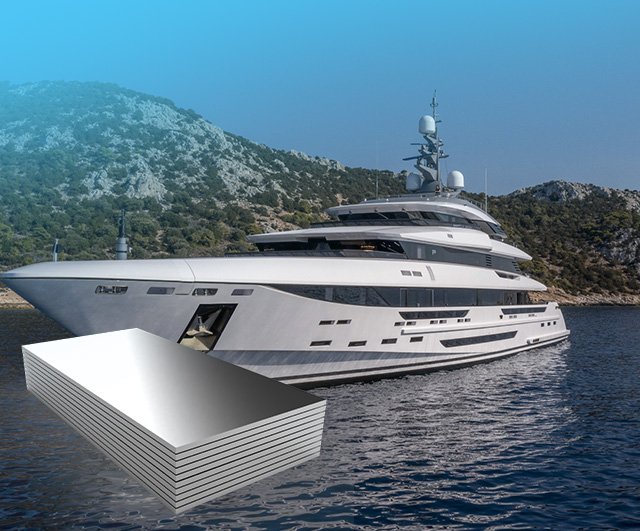
Aluminum plates for yacht buildingprimarily usemarine-grade 5xxx series alloyslike5083, 5086, and 5052, which are prized for their excellent corrosion resistance in saltwater environments, good weldability, and strength-to-weight ratio. The choice of alloy often depends on the specific part of the yacht being constructed.
Primary Alloys for Yacht Construction
5083 Aluminum Alloy: This is the most common choice for yacht construction, particularly for thehull and structural components.
Corrosion Resistance:It offers superior resistance to saltwater and marine atmospheres. Tempers such asH116andH321are specifically stabilized for use in direct seawater environments to prevent stress corrosion cracking.
Strength:It has high strength and maintains performance after welding, making it ideal for the main structure.
Applications:Hulls, decks, fuel tanks, and bulkheads.
5086 Aluminum Alloy: Considered a superior alloy by some experts for marine environments, it has similar characteristics to 5083 but with added strength when cold worked.
Corrosion Resistance:Offers excellent resistance, especially in saltwater.
Strength:High tensile strength and low density, making it suitable for high-performance vessels.
Applications:Hulls, side sheets, and keels.
5052 Aluminum Alloy: This alloy is often used for theupper parts and interior componentsof yachts.
Formability:It has excellent formability and is easy to work, making it suitable for complex shapes and smaller parts.
Corrosion Resistance:Provides good corrosion resistance in marine environments, though 5083 is generally preferred for constant saltwater immersion.
Applications:Interior walls, partitions, cabin structures, flooring, and non-structural components.
Secondary Alloys for Specific Components
6061 Aluminum Alloy: While the 5xxx series is primarily used for plates, the heat-treatable 6061 alloy is a versatile general-purpose material forextrusions and structural reinforcement.
Strength:It offers high strength (higher than 5052 or 5083 in some tempers like T6) and excellent mechanical properties.
Applications:Masts, railings, frames, keel linings, and other structural extrusions. 6061 aluminum tread plates are also used for anti-slip decks.
6063 Aluminum Alloy: Known for its good surface finish and formability, it is used fordecorative and outfitting elements.
Applications:Porthole frames, railings, and trims.
Why Choose Marine Aluminium Sheet for Yacht-shipbuilding
Yacht builders prefer marine-grade aluminum for the following reasons:
Durability:Aluminum does not rust, corrode, or rot like other materials, leading to a longer lifespan.
Lightweight:The high strength-to-weight ratio allows for faster speeds, lower fuel consumption, and increased payload capacity.
Safety:Aluminum is non-combustible and has excellent impact resistance, enhancing safety at sea.
Weldability:The specified alloys can be easily welded to form strong, reliable joints.
For quality assurance, it is important to select aluminum plates that are certified by major classification societies such as ABS, DNV, LR, BV, or CCS.